
Starting a business brings plenty of decisions. What should you offer? Who needs it? How will you turn an interested visitor into a customer and make that customer feel supported?
You do not need to solve every challenge at once. But you do need a clear way to listen, collect useful information, and follow through.
That is where Typeform can fit into your startup’s toolkit. Its conversational forms, surveys, and quizzes can help you learn what people need and create a more intentional first interaction. Its broader platform also includes AI and automation capabilities for taking the next step with that information.
At Elevate, we believe good systems should bring clarity, not add complexity. This guide explores practical ways to use Typeform as you launch, what to consider before investing, and how to start with one manageable process.
Disclosure: This article contains an affiliate link. If you sign up through our link, we may earn a commission at no extra cost to you. We only recommend tools we use and trust.
What is Typeform and why might a startup use it?
Typeform is a form builder and automations platform that combines human-first design with AI capabilities. You can use it to create interactive experiences for customer research, inquiries, onboarding, feedback, and more.
Think of a form as the beginning of a conversation rather than a place to store answers. A thoughtful form gives someone room to explain their needs. A thoughtful process helps you respond appropriately afterward.
For a new business, that might mean:
Typeform also offers Typeform AI for creating and customizing forms, along with reporting and automation capabilities across its platform. Feature availability, usage limits, and access to advanced tools depend on the product and plan you choose. Do not assume every capability is included in an entry-level subscription.
Four Practical Ways to Use Typeform as a New Business
1: Learn From Potential Customers Before You Build Too Much
A promising idea is a starting point, not proof that customers will buy.
Before expanding your offer, use a short survey to understand your audience’s experiences. Ask about the problem they face, how they handle it today, and what remains difficult.
For example, a founder considering a business-planning service could ask:
- What feels most challenging about starting your business right now?
- What have you already tried to make progress?
- Which task would you most like help completing?
- What would a useful next step look like for you?
These questions invite context rather than encouraging people to agree with your idea. Avoid leading questions such as, “Would you love an affordable service that makes starting a business easy?”
Look for recurring concerns, then follow up with conversations where appropriate. A small survey can guide your next experiment, but it does not represent an entire market or guarantee demand.
Your next right step: Choose one business decision you need to make. Build a survey that helps inform that decision and leave unrelated questions for later.
2: Turn General Inquiries Into More Useful Conversations
A name and email address tell you how to contact someone. They do not tell you what that person needs.
A startup inquiry form can collect a few relevant details, such as the service someone is interested in, their main goal, and their preferred timeline. Typeform’s branching logic can route people to different questions based on earlier answers.
Imagine you are launching a creative studio. Someone requesting a new website may need questions about existing content and launch timing. Someone requesting a logo may need questions about their business identity instead.
Relevant questions help you prepare without asking every visitor to work through the same long intake form.
Keep the purpose clear. Explain what happens after submission and offer a realistic response window that your team can meet. A polished form is helpful; a dependable response is what builds trust.
3: Create a Calmer Client Onboarding Experience
Once a customer decides to work with you, make the next step easy to understand.
For a service-based startup, an onboarding form can gather the basic information needed to begin: the primary contact, agreed goals, relevant project context, and communication preferences.
Keep inquiry and onboarding forms separate. A potential customer should not have to complete a detailed project questionnaire just to ask whether you can help.
You can also use a welcome message to explain why you are asking for information:
Welcome! We are glad you are here. These questions help us prepare for your kickoff and understand your priorities. Please share only the information requested. We will confirm the next steps after reviewing your responses.
A form supports onboarding; it does not replace a clear scope of work, agreed terms, or a conversation about expectations.
Protect trust from the start: Collect only what you need. Do not use a general intake form to request passwords, Social Security numbers, bank credentials, or sensitive client documents. If your work requires confidential or regulated information, review the applicable security, contractual, and legal requirements before choosing a collection method.
4: Ask for Feedback While the Experience is Still Fresh
Your first customers can help you understand where your process needs attention.
After a purchase, project milestone, or service delivery, send a short feedback survey.
Keep it focused:
- What was most helpful about your experience?
- Was anything unclear or harder than expected?
- What is one thing we could improve?
Use the answers to make a specific change. If several customers are unsure about next steps, improve your welcome message. If the same question appears repeatedly, explain that topic earlier.
Feedback is not automatically a testimonial. Obtain separate permission before publishing someone’s words, name, or identifying details.
“A good feedback system turns listening into learning. It helps you see what’s working, catch friction early, and make thoughtful improvements while the experience is still fresh.“
- Elevate Team
Beyond 'Submit.' Where Growth Flow Fits
Collecting information is only useful if someone acts on it.
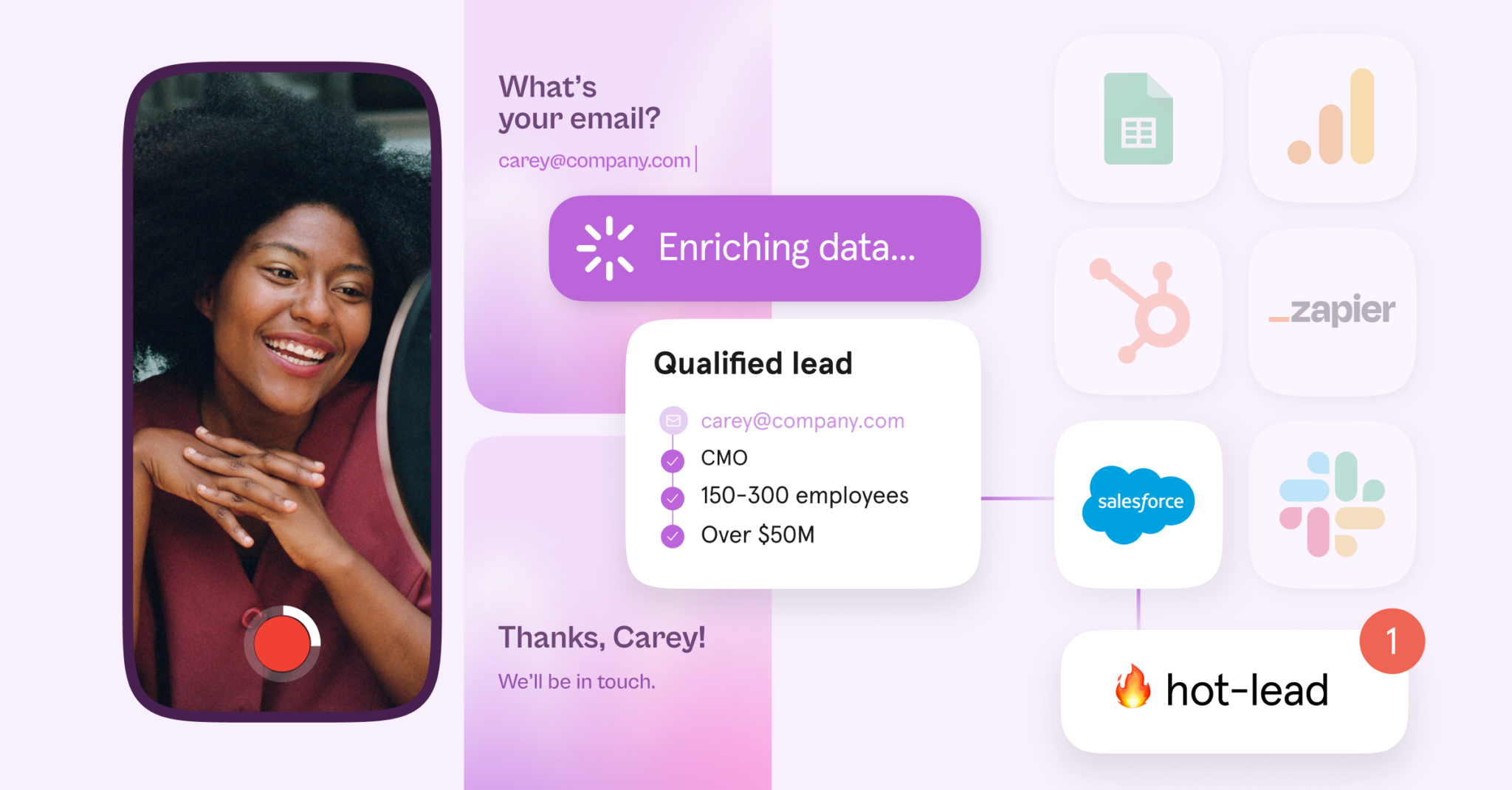
Typeform positions Growth Flow as the part of its platform that turns responses into automated actions across the customer journey. Depending on the available features and your configuration, that can include organizing contacts, enriching lead information, and supporting follow-up workflows.
The distinction matters: building a form and automating the process after submission are related, but they are not the same purchase decision.
A new founder with a small number of inquiries may be well served by reviewing responses personally. A growing team handling repeated follow-up tasks may have a stronger reason to evaluate automation.
Start by documenting what should happen after someone submits a form. Decide who owns the response, what message the person should receive, and when human review is needed. Only then consider which steps are worth automating.
For marketing email or SMS, obtain the appropriate consent, explain what people are signing up for, and honor opt-out requests. Completing an inquiry form should not be treated as blanket permission for promotional messages.
A Simple First-Form Blueprint for a Business Startup
Suppose you are launching a small consulting business and want to organize discovery-call inquiries. Here is an illustrative starting point, not a claim about results or a ready-configured workflow.
Explain who the form is for and what happens next.
Ask, “What would you like help with?”
Ask, “What is the main challenge you are facing?”
Ask when they hope to begin, with an option for “I am still exploring.”
Request their name and preferred email address.
Thank them and state your realistic response window.
Link to your privacy notice and explain how you will use the information. Keep any newsletter invitation optional and separate from the inquiry.
Before sharing the form, submit test responses on a phone and a computer. Check that the wording is clear, any branching follows the intended path, and your team can find and respond to submissions.
You can start with a template or use Typeform AI to help draft the structure.
A useful prompt might be:
Create a short discovery-call inquiry form for a new consulting business. Use warm, plain language. Ask about the service needed, the main challenge, the preferred timeline, and contact details. Include an option for people who are still exploring. Do not request sensitive information or assume marketing consent.
Review the output yourself. AI can help create a starting point; you remain responsible for the questions, accuracy, and customer experience.
Choose a Plan That Fits Your Needs
For a startup, every recurring expense deserves a clear purpose.
Before paying for Typeform, identify your must-haves and check the current product details. Consider:
- Response volume: Will the plan accommodate the submissions you expect?
- Branding: Which customization options do you actually need?
- Logic: Can you create the question paths your process requires?
- Follow-up: Do you need automation now, or can you manage it personally?
- Reporting: Which insights will help you make a real decision?
- Total cost: What are the billing commitment, usage limits, and any additional costs?
Review Typeform’s Growth plan details before purchasing. Prices, packaging, and features can change. If a price is displayed as a monthly equivalent with annual billing, do not treat it as a month-to-month payment option.
Typeform may be worth considering when conversational design, tailored question paths, and customer-facing presentation matter to your process. If you only need a very simple occasional form, a lower-cost tool you already use may be enough. Choosing carefully is progress, not a missed opportunity.
Keep Your First Launch Manageable
You do not need a complete automated customer journey on day one. Start with one form and one reliable next step.
Use this checklist before launch:
- The form has one clear purpose.
- Every required question supports that purpose.
- The language is welcoming, direct, and easy to understand.
- Any branching has been tested.
- The privacy notice and relevant consent choices are clear.
- Someone is responsible for reviewing submissions.
- The closing message sets expectations you can meet.
- The selected plan supports your required features and expected usage.
After launch, review what people are telling you and whether the form helps your process. Where your plan provides relevant reporting, use it to investigate confusing questions or drop-off points. Improve one part at a time rather than adding more questions by default.
Build With Clarity, One Conversation at a Time
A new business does not need more tools simply to look established. It needs a thoughtful way to understand people and follow through on its promises.
Typeform can support that work through conversational forms, AI-assisted creation, and broader automation capabilities when the time is right. The strongest starting point is still simple: know why you are asking, respect the information people share, and make the next step clear.

Sign Up Today
Ready to turn better questions into your next business move?
Explore Typeform Growth Today.
Start with one clear goal, understand your audience, welcome new inquiries, or gather customer feedback, and choose a plan that fits your needs and budget.
Your next customer conversation starts with a thoughtful question.
Disclosure: This article contains an affiliate link. If you sign up through our link, we may earn a commission at no extra cost to you. We only recommend tools we use and trust.